 |
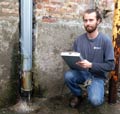
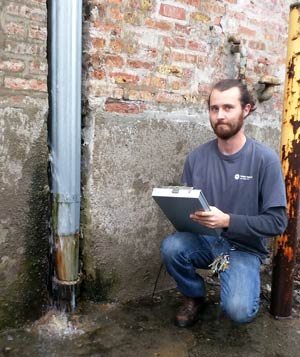
| John Reisner, Night Maintenance PDOP, uses the Rainy Day Checklist |
Prevent Property Loss with Building Inspections
October is fire safety month, and when it comes to prevention, PDRMA members understand the importance and value of conducting building inspections to manage the risk of fire, water intrusion and other potential events.
“We do building inspections year round at the Park District of Oak Park (PDOP),” explains Gabriele Romanucci, Human Resources Safety and Risk Manager. “And since we’re prone to flooding, we have a Rainy Day Checklist to help us stay ahead of any problems that might develop.”
Staff focuses on window well drains, basement and door drains that are below grade, and sump pumps. “The rainy-day inspections allow us to catch problems before they happen — or at least before they become bigger problems,” he adds.
 |
| Eric Fleishman, Night Maintenance PDOP, clears a drain as part of the Rainy Day Checklist |
Regular inspections have found damaged or vandalized electrical outlets and walk boxes in light poles that Oak Park repaired before further damage or injuries could occur. And the Rainy Day Checklist turned up minor roof leaks and drain blockages that staff was able to repair before any significant water damage occurred.
At Glenview Park District, Jim Warnstedt, Superintendent of Park and Facility Services, agrees that additional inspections are invaluable when the forecast calls for inclement weather. “In addition to monthly facility inspections, we check our buildings before and after heavy rain events. This helps ensure our backup generators are ready to power the sump pumps if we lose electricity. Our staff also checks for roof leaks or foundation seepage,” he says. “Even when the weather is fine, our staff knows to do an additional inspection whenever they’re at a location to take care of a work order.”
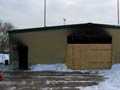
In 2011, after the loss of its maintenance garage to fire the previous year, Glenview contracted with Rolf Jensen & Associates to conduct an indoor fire alarm assessment, which included a physical evaluation of existing systems as well as complete testing.
“Rolf inspected 40 of our structures at 23 different locations and went more in depth than we’re able to with our regular monthly inspections,” explains Warnstedt. “The company provided a 13-page assessment report as well as recommendations for prioritizing the suggested work. It cost us close to $15,000, but it was worth the investment.” (Check with your agency’s corporate counsel to determine whether the Illinois Tort Immunity Fund can help cover the cost of such an inspection.)
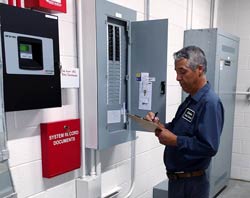 |
| Victor Diaz, Glenview Pool and HVAC Tradeworker, inspects Park and Capital Facility Services east building |
One improvement as a result of the inspection is the installation of fire alarm systems in all of Glenview’s 13 field houses as it renovates them; eight are now completed, and the remaining five are already on the project schedule.
“We continue to work on the other suggestions in the report, especially when we can incorporate them into our planned renovations,” he adds. “After sustaining a loss of the magnitude we did in 2010, it changes the way you look at things and makes you even more diligent. Renovations are an opportunity to upgrade fire prevention systems and meet code changes while work is underway at our facilities.”
Preventing loss requires being proactive about inspections and repairs. “Establish a routine, but don’t let it become a routine,” advises Romanucci. “Assign different inspectors to different facilities; and every so often, switch them up to have a different set of eyes inspect each one.” You might be surprised by what gets noticed.
PDRMA Resources:
|