
Bathrooms and Locker Rooms — Respecting Privacy, Preventing Abuse
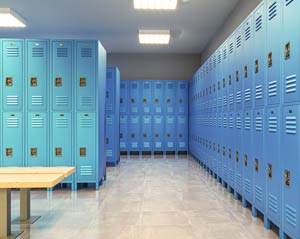 Bathrooms and locker rooms are designed to provide privacy — but from a risk management perspective, that privacy can also create vulnerability.
These spaces can be settings for sexual abuse, inappropriate conduct, bullying or allegations of misconduct involving employees, participants, peers or third parties. The risk can be particularly concerning when it involves children or vulnerable adults.
“For park and recreation professionals, the goal isn’t to eliminate privacy,” says PDRMA Risk Management Consultant Cheryl Morley. “It’s to create an environment where appropriate supervision is possible without compromising the dignity and privacy of participants.”
Why These Spaces Require Extra Attention
The secluded nature of bathrooms and locker rooms can make it difficult for staff to know what is happening inside, which can create several risks.
 Peer-to-peer abuse or inappropriate conduct involving children or vulnerable adults. - Unobserved access to children or vulnerable adults by employees, volunteers, contractors or other adults.
- Bullying or inappropriate behavior that may go unnoticed.
- Misunderstandings or allegations of misconduct when there is no supervising witness to help establish what occurred.
A strong preventive strategy begins with a simple principle, Morley explains. “Don’t create opportunities for one-on-one interaction or situations where an individual has actual or perceived power or control over a participant.”
Supervise Without Sacrificing Privacy
There is no single approach that works for every facility or program. However, your agency can take practical steps to reduce risk while maintaining appropriate privacy.
Establish clear bathroom and locker room policies — and make sure all employees, volunteers and program supervisors understand and consistently follow them.
 Supervise from the doorway — Employees can often supervise children or vulnerable adults from the bathroom or locker room doorway. This provides visibility into the space while respecting the privacy of individual stalls and changing areas. - Use two employees when someone needs assistance — When a child or vulnerable adult requires personal assistance, consider having two employees present when possible.
- Think about who is using the space — Supervisors should consider the ages, relationships, interactions and behaviors of participants when determining who may use a bathroom or locker room together. Bullying and peer-to-peer abuse risks should be part of that assessment.
- Limit the number of participants simultaneously using the facility — Determine whether you need to have more participants in the bathroom than there are available stalls or fixtures. When appropriate, an employee can send participants into an otherwise empty bathroom one at a time while supervising the remaining group from outside the door.
- Pay attention when groups need to change clothes — Swimming, gymnastics, athletics and other programs may require participants to use changing areas at the same time. Staff should actively monitor behavior to spot interactions that could create a safety concern.
Minimize Adult-Child Interaction When Participants Are Undressed
Whenever possible, minimize interaction between adults and children when either may be undressed. Critical questions to ask are:
- Can they use a separate space?
- Can you restrict access to a shared space?
- Can participants change into program attire at home, prior to arriving?
- Can you adjust schedules so children and adults do not use the space at the same time?
- Is it necessary for an employee to be present inside the space?
Small, operational changes can significantly reduce opportunities for inappropriate conduct and can also help protect employees from misunderstandings or allegations.
“One common misconception is that sending several children into a bathroom or locker room together provides adequate protection, because they are not alone,” Morley says. “But it doesn’t. There’s just no substitute for adult supervision.”
Morely also cautions members against having an older child supervise younger children or vulnerable adults. And that includes counselors-in-training and teen volunteers. Never place them in a supervisory role that an adult employee should perform.
Stay Alert — And Trust Your Risk Management Process
 Preventing abuse is not simply about having a policy. It requires awareness, consistent supervision, appropriate staffing and a willingness to recognize situations that could create an opportunity for abuse or inappropriate conduct.
Take a critical look at your facilities to determine where supervision could break down. Walk through your bathrooms and locker rooms. Review your staffing practices. Talk with program supervisors. Consider what happens during busy program times, swim lessons, camps, special events and activities involving children or vulnerable adults.
Most importantly, make sure employees know what you expect of them — and that speaking up about concerning behavior is part of creating a safe environment.
Make Prevention Part of Your Agency’s Culture
The strongest prevention programs are built on everyday awareness. “Know where your vulnerabilities are,” explains Morley. “Establish clear expectations. Supervise consistently, train your staff and take concerns seriously. Bathrooms and locker rooms may be private spaces — but privacy should never mean a lack of appropriate oversight.”
PDRMA Resources
|