
Winter Brings a Training Bonanza
Like risk management itself, training that supports it also must be ongoing. But when’s the best time to create your training plan?
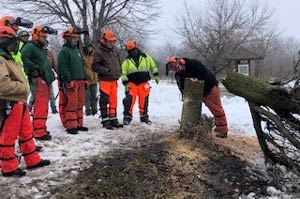 |
Sr Ranger Alex Donat
conducts chainsaw training |
“Fall is a great time to begin planning employee training for the upcoming year,” explains Mary Pedersen, PDRMA Risk Management Consultant. “Talk with your safety committee and leadership team to determine what’s working well and where you might need to focus more attention.”
Staying organized is a must, adds Pedersen, since you’ll likely have to keep track of compliance training (like sexual-harassment prevention) as well as other topics, department needs and employee availability. PDRMA has the following sample plans (not inclusive of all training requirements or agency needs) that can help you stay on top of your agency’s training, and you can customize them as needed.
Kane County Forest Preserve’s Solutions
Chuck Misner, Safety & Wellness Coordinator, Kane County Forest Preserve, shares how his agency develops and manages their staff training.
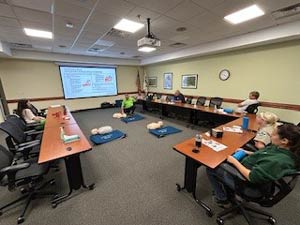 |
Chuck Misner,
Safety and Wellness Coordinator teaches
Red Cross CPR |
“We start planning our training for the upcoming year in November with our Safety Team,” he says. “An employee from each department brings their training needs to the discussion. We decide our top priorities, add the departmental supervisors to the discussion and ask them to implement the plan.”
Departmental directors and managers are also responsible for holding their employees accountable for completing assigned training. Misner uses a training spreadsheet segmented by department and position to monitor training completions.
“It doesn’t have to be complicated,” Misner adds. “Our training calendar is relatively simple and covers a calendar year. We do break out the required training by department and position.” Once finalized, the Safety Coordinator sends the plan to all employees in February with updates in July and November.”
Top Tips
Misner suggests the following to PDRMA members wanting to stay on top of agency training:
- Analyze your losses to focus on training topics that go beyond just regulatory compliance.
- Ask the work groups what they need. His Safety Team members are the key to keeping information flowing from the team to the employees and back again.
- Tailor training to the department/work group and individual positions.
When you’re considering training for 2026 — and the remainder of 2025 — don’t forget these important topics.
Winter Safety
It’s coming — winter, that is. Freezing temperatures, snowstorms, ice and every possible weather combination. And it can mean employee and patron injuries, if you overlook training both new and experienced employees. Update your agency’s winter plans, ensure everyone knows how to use the equipment they'll operate, and don't forget about these PDRMA resources to ensure everyone’s up to speed on winter safety.
Cybersecurity
Cyber breaches, be it ransomware or other attacks, can happen throughout the year and significantly disrupt your agency’s operations. Our Risk Management Review Essentials of Risk Management Form devotes two questions to cybersecurity (11 and 12). When planning your employee training, these PDRMA resources can help ensure staff understands cyber risk and knows how to respond.
|
|