Time for a Fresh Look at PPE
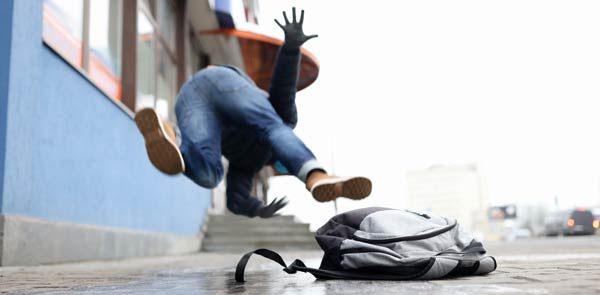
For years, we’ve talked about managing the risks associated with slips, trips and falls (STF) — one of the leading causes of injury and liability lawsuits. For 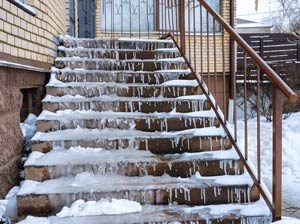 employees, STFs are the second leading cause of nonfatal injuries, accounting for nearly 23 percent of all workplace accidents. Occupational Safety and Health Administration’s (OSHA) General Duty Clause requires employers to provide a workplace free from recognized hazards that cause, or are likely to cause, death or serious physical harm. In addition, OSHA’s Personal Protective Equipment (PPE) standards require employers to provide appropriate PPE for hazards an employer can’t eliminate. So why do so many employers consider slip-resistant footwear an optional item, especially in winter? employees, STFs are the second leading cause of nonfatal injuries, accounting for nearly 23 percent of all workplace accidents. Occupational Safety and Health Administration’s (OSHA) General Duty Clause requires employers to provide a workplace free from recognized hazards that cause, or are likely to cause, death or serious physical harm. In addition, OSHA’s Personal Protective Equipment (PPE) standards require employers to provide appropriate PPE for hazards an employer can’t eliminate. So why do so many employers consider slip-resistant footwear an optional item, especially in winter?
A STF “Secret” Weapon?
According to Jenny Porrevecchio, PDRMA Risk Management Consultant, proper PPE, while not the most effective method of hazard control, is still a key part of the Hierarchy of Controls — a way to identify and prioritize safeguards to protect employees from hazards. “For hazards that your agency cannot control using elimination, substitution or engineering/administrative controls, PPE is invaluable in helping your employees to stay safe when performing their job tasks. Snow and ice hazards are almost impossible to avoid in the winter months, so employees working outdoors should have — and be required to wear — footwear that protects them from those slippery conditions,” she explains.
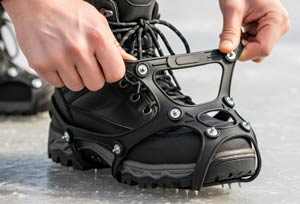 In icy conditions, slip-resistant footwear, and ice cleat devices specifically, help staff maintain traction when outdoors. Since many STF incidents occur not only during snow/ice removal tasks but in all types of outdoor tasks in winter, agencies should assess job tasks to determine which ones require ice cleats. Once you determine this, be sure to provide a variety of ice cleat options for your staff and educate them on how and when to wear their PPE, since PPE is most effective when employees actually wear it and know how to wear it properly. In icy conditions, slip-resistant footwear, and ice cleat devices specifically, help staff maintain traction when outdoors. Since many STF incidents occur not only during snow/ice removal tasks but in all types of outdoor tasks in winter, agencies should assess job tasks to determine which ones require ice cleats. Once you determine this, be sure to provide a variety of ice cleat options for your staff and educate them on how and when to wear their PPE, since PPE is most effective when employees actually wear it and know how to wear it properly.
“One major reason we hear from agency employees as to why the don’t wear ice cleats, is the amount of time needed to put on and take off the PPE when moving from indoor to outdoor tasks and/or going from driving a vehicle to working outdoors,” Porrevecchio says. “Traction devices that are easy to move off the sole of a boot or shoe instead of needing to be taken off completely are good options to avoid this issue.”
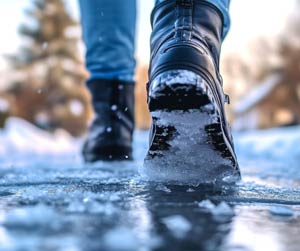 There are a variety of choices that allow employers to offer more appropriate options for flat-soled shoes and standard work boots: There are a variety of choices that allow employers to offer more appropriate options for flat-soled shoes and standard work boots:
“It’s a straightforward solution,” explains Porrevecchio. “Slips, trips and falls are a major source of worker injury, and ensuring your workers have proper PPE and adequate training on using it reduces the risk of STFs in icy and wet conditions.”
Consistency is a big factor in ensuring the success of your agency’s PPE. Staff needs to know that agency policy is that they must use traction devices when icy conditions are present, similar to other PPE requirements.
Porrevecchio suggests reading/reviewing the following resources to keep your staff safe this winter.
Although PPE alone won’t eliminate all STF hazards, selecting the proper equipment and providing the necessary training will reduce STF-related injuries. For questions or feedback on your agency’s STF prevention efforts, contact your Risk Management Consultant. |