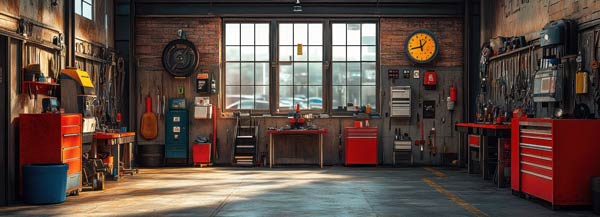
Is Your Maintenance Garage Fire Safe?
A fire in your agency’s park or golf maintenance facility may be rare, but if it happens, the consequences can be devastating. Nationally, fire departments respond to an estimated 211,500 vehicle fires each year, resulting in approximately $1.9B in property damage annually. Garage fires often destroy buildings, fleets, specialized mowing equipment, tools, parts inventories and other critical assets — bringing agency operations to a halt for weeks or even months.
Special Hazards in Your Garage
Combustible materials — Maintenance facilities present unique fire hazards. Fuels, propane, paints, aerosols, oily rags and other combustible materials can quickly turn a small equipment fire into a catastrophic building loss.
Mechanical and Electrical Failures
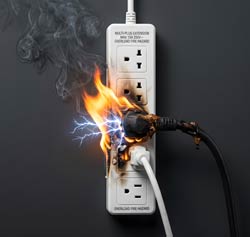 These failures remain among the leading causes of vehicle fires, underscoring the importance of preventive maintenance and early detection. Overreliance or inappropriate use of extension cords — or animals’ nests near hot engine components — can easily combust and spread. A very common scenario begins when an electrical malfunction or grass and debris close to a hot engine ignites and spreads to nearby equipment and the building. These failures remain among the leading causes of vehicle fires, underscoring the importance of preventive maintenance and early detection. Overreliance or inappropriate use of extension cords — or animals’ nests near hot engine components — can easily combust and spread. A very common scenario begins when an electrical malfunction or grass and debris close to a hot engine ignites and spreads to nearby equipment and the building.
Make Your Garage Worthy of the Good Housekeeping Seal of Approval
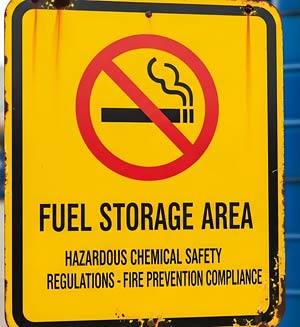 Luckily, you can prevent many of these losses with routine housekeeping and proactive maintenance. Consider these best practices: Luckily, you can prevent many of these losses with routine housekeeping and proactive maintenance. Consider these best practices:
- Never store propane cylinders indoors.
- Store gasoline only in approved metal safety cans.
- Keep flammable liquids in approved storage cabinets and never exceed cabinet capacity.
- Remove combustible debris such as grass clippings, leaves, cardboard, paper and trash from work areas promptly.
- Store oily rags in covered metal containers.
- Use Hot Work Permits whenever welding or cutting.
- Minimize the use of extension cords by installing permanent electrical wiring where needed.
- Inspect overhead heaters, garage door openers and similar equipment for bird or rodent nests that could ignite during operation.
- Perform monthly formal documented inspections of facilities and correct hazards promptly. [See Monthly Building Fire and Conservation Inspection Checklist (119)].
In Addition to Good Housekeeping…
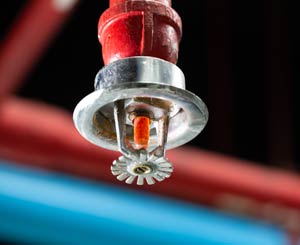 If not already in place at your facilities, add monitored fire alarm systems to provide early identification. If not already in place at your facilities, add monitored fire alarm systems to provide early identification. - Consider a fire suppression system (sprinkler system) in all your facilities.
- If your agency is considering renovating your current maintenance facility or constructing a new one, take advantage of PDRMA’s Preconstruction Fire Suppression Design Review service through Kodiak Fires Protection Services. At no additional cost to PDRMA members, Kodiak will review smoke/fire detection and sprinkler systems during your preconstruction planning phase. For more information, download our Preconstruction Fire Suppression Design Review and Guidelines (1599) document.
- If you need help identifying potential hazards before they become costly losses, contact your PDRMA Risk Management Consultant to evaluate your fire prevention program.
A single preventable fire can have lasting financial and operational impacts — not only for your agency but the entire PDRMA risk pool. Protect your employees, facilities and equipment by reviewing your maintenance garage fire prevention practices today.
PDRMA Resources
Monthly Building Fire and Conservation Inspection Checklist (119).
Preconstruction Fire Suppression Design Review and Guidelines (1599). |